


Weeks
Week Info

Week Number
9

Plant Height
36 inch

Day Air Temperature
82 ºF

Night Air Temperature
72 ºF

Light Schedule
12 hrs

Solution pH
6

Solution TDS
1080 ppm
Air Humidity
50 %

Smell
High

Substrate Temperature
77 ºF

Pot Size
3 gal

Lamp to Plant Distance
15 inch

Watering Volume
4 L
Gallery


Comment
Week #9 (Mid-Flower – Week #4)
Light intensity was held steady at 820–850 PPFD with a DLI of 36–37. The light remained 15" above the canopy, and UV-A exposure continued at 2 hours per day. Environmental conditions were stable throughout the week: daytime temperatures averaged 82°F, with nights around 72°F, and relative humidity hovering at 50%. Soil temperature remained consistent in the mid-70s.
Nutrient demand began to taper compared to the previous few weeks. I only needed to feed twice in Week 9, using an input strength between 1,000–1,100 ppm. Runoff stayed right in the target range at 1,200–1,400 ppm, with pH holding steady at 6.2. To prevent pH from drifting too low, I adjusted the input solution to 6.8. Daily watering continued at 4 liters per day with Cal-Mag support. Silica was still being added once per week but was discontinued at the end of this week in preparation for the transition to late flower.
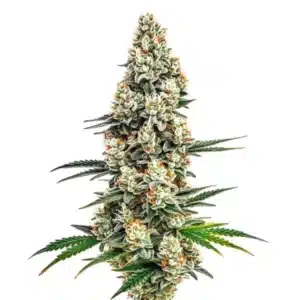
I installed trellis netting in Week 9, primarily to support the untopped Blueberry plants, which had started leaning under the weight of their forming buds. In my experience, untopped plants are more challenging to manage structurally - especially in late flower and ripening. While topped plants also benefit from support, they tend to maintain a more stable architecture and form a more even canopy. That’s a debated topic, but it’s been consistently true in my own grows.
Aromatics saw a notable jump this week. Stardawg’s scent profile deepened and became far more pronounced, contributing to a strong and complex presence in the tent as mid-flower peaked.