

Grow Diary Blueberry
Growing Blueberry

Michael the Barred Owl
Weeks
Week Info

Week Number
11

Plant Height
36 inch
Day Air Temperature
83 ºF
Night Air Temperature
69 ºF

Light Schedule
12 hrs

Solution pH
6

Solution TDS
670 ppm
Air Humidity
50 %

Smell
High
Substrate Temperature
75 ºF

Pot Size
3 gal

Lamp to Plant Distance
15 inch

Watering Volume
4 L
Gallery


Comment
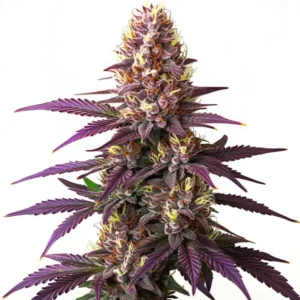
This week marked the first week of late flower for both Blueberry plants. By this point, bud weight had increased significantly, and I had to add structural support to every branch of Blueberry #1 - similar to what I did for Blueberry #2 back in Week 9.
Feeding continued a few times per week, but at a much lower strength than in mid-flower. I aimed to maintain EC levels in a healthy range, keeping nutrient concentrations between 800–1,000 ppm to support ripening without overloading the medium.
Mid-week, I performed a detailed trichome inspection to assess maturity. I took 2–3 macro images of each branch set, calculated the trichome distribution for each node, and used a weighted average to get a clear picture of overall progression for both plants. The results showed that both Blueberry plants were maturing at a similar rate, with an average trichome profile of 30% clear, 65% cloudy, and 5% amber. Individually,
By this stage, I had tapered UV-A exposure from its peak of 2 hours per day in mid-flower down to 60 minutes daily. I held steady at that duration throughout Week 11. Light intensity remained high across the canopy to keep pushing the sativa-leaning Stardawg, which continued to trail the Blueberry plants by a couple of weeks in terms of maturity.